Water damage restoration in Hialeah Gardens, FL
Hialeah Gardens shares a name and a border with Hialeah and almost nothing else administratively. One of the differences shows up on the flood insurance bill every year. Tell us what the water did and we will get you a free quote from a restoration contractor working here.
- Free quote
- Hialeah Gardens properties
- No obligation
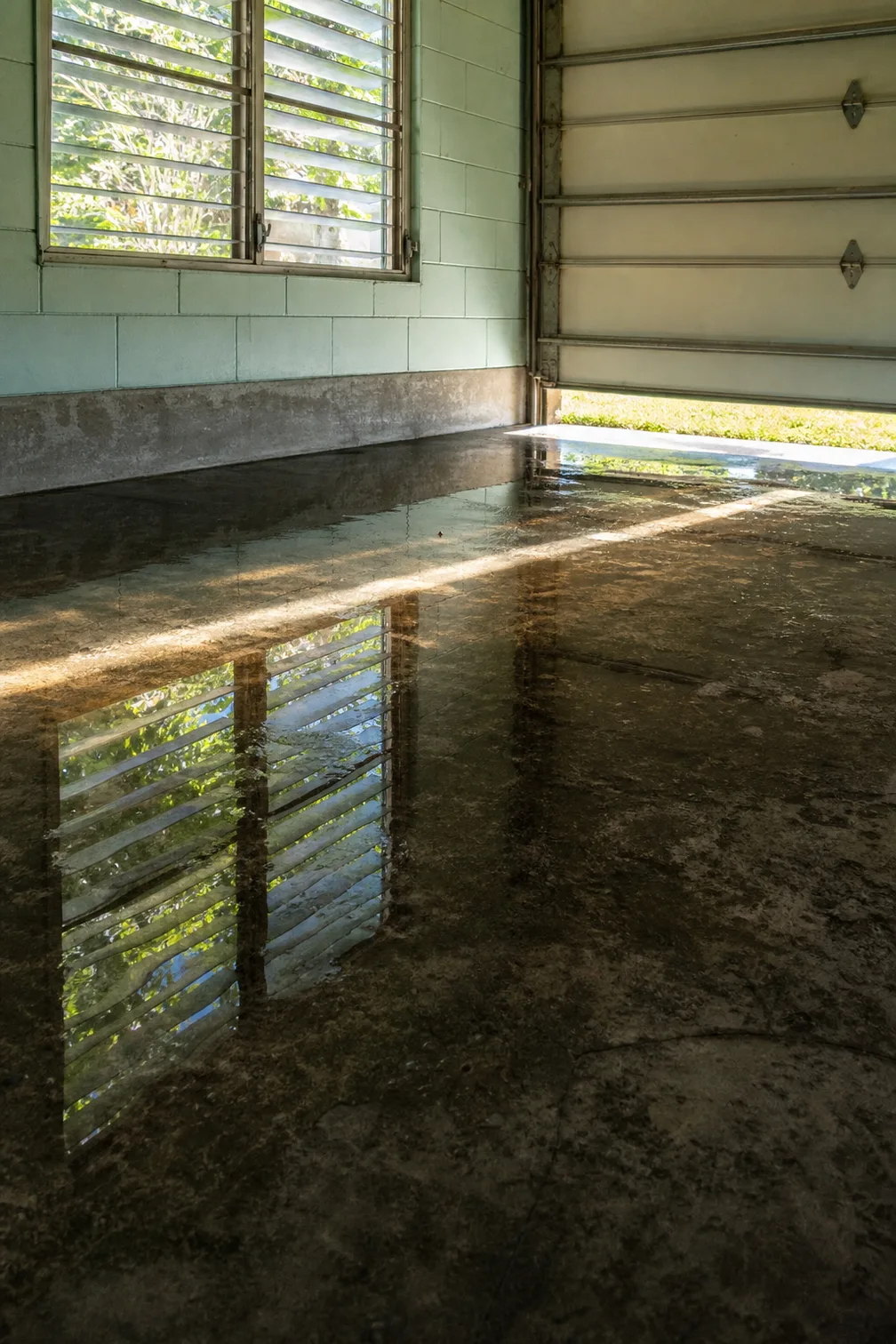
Why the city line matters here more than the trade does
The physical job does not change at the city boundary. Water comes out, material that will not dry comes out with it, what remains is dried and cleaned according to what the water was carrying. That sequence is the same in every city on this site.
What changes at this particular boundary is the paperwork and the price, and it changes more sharply here than anywhere else in the ring. Hialeah Gardens is not a neighborhood of Hialeah. It is its own city, with its own building department, its own permit counter, and its own line in the federal flood insurance register. One of those lines is blank where its neighbors' are not.
The scheme this city never joined
The National Flood Insurance Program runs a voluntary add-on called the Community Rating System. Miami-Dade County's own mitigation strategy describes what it is for: it "recognizes and encourages community floodplain management activities that exceed the minimum NFIP requirements", and "as a result, homeowners benefit from a significant discount on their flood insurance premium".
A participating city is scored on public information, mapping and regulation, flood damage reduction and flood preparedness, and comes out with a class from 1 to 10. The county sets out the money: class 5 is 25% off inside a flood zone, class 6 is 20%, class 7 is 15%, class 8 is 10%, class 9 is 5%, and class 10 is nothing.
That county document lists 23 Miami-Dade communities in the scheme. Hialeah Gardens is not one of them, and FEMA's current status book still records no class for it. The city has been in the National Flood Insurance Program itself since 29 September 1972, so flood cover is available and has been for over fifty years. The community discount is the piece that has never existed here.
Hialeah, sharing a boundary, holds class 7. On an identical house with an identical policy, that is 15% inside the flood zone that a Hialeah Gardens address does not get. Over the life of a mortgage it is not a small number, and nothing about the two buildings explains it.
None of that is a criticism of the city and it is not something a resident can change on their own. It is simply a fact about the address that most owners never learn, because nobody itemizes a discount you were never offered.
Forty-two properties, and thirty-six of them are newer than the map
FEMA publishes, by community, the count of properties that have made more than one flood claim. Hialeah Gardens has 42. Nine of those are on the severe repetitive loss list, which is the tighter definition FEMA reserves for the worst of them.
Twenty-seven of the 42 are in flood zone AE, ten are in zone AH and the remainder sit in shallower or unmapped categories. Miami-Dade County publishes what those mean: AE "corresponds with flood depths greater than three feet", and AH is "areas of shallow flooding with average depths between one and three feet".
The figure that separates this city from its neighbors is a different one. Of the 42, thirty-six are recorded as post-FIRM construction, which means the building went up after the city's first flood insurance rate map existed. In Opa-locka that proportion is 5 of 27. In Miami Gardens it is 5 of 28.
The plain reading is that this city did most of its building after 1972, which is true and unremarkable. The useful reading is different. These are not old houses that predate anybody knowing where the water goes. They are buildings put up with a flood map on the wall, to the elevation standards of their decade, and they have flooded more than once anyway.
That should change what an owner expects. If your house is newer than the map, a flood is not evidence that something was done wrong when it was built. It is usually evidence that the water arrived somewhere the map does not describe: drainage that could not discharge, a water table already at the surface, or rain heavier than the design event the map was drawn for.
Ponding, and why the depth category matters more than the letter
Ten of the repeat-loss properties here are in zone AH, the shallow ponding category. It is worth understanding as a behavior rather than as a lesser version of zone AE.
Ponded water arrives slowly and leaves slowly. There is nowhere for it to drain to, because the ground below is already saturated, so it sits. It comes in under doors, through vents and around thresholds rather than through windows. It is frequently only an inch or two deep inside the building.
An inch sounds survivable and often is not, because the damage is a function of time as much as depth. An inch that stood for eighteen hours against painted block, cabinet bases and a floor covering has put moisture into more of the building than several inches that drained away in an hour. In a warm month the second problem starts before the first one is finished.
Reading the estimate, and asking about permits
Three things make a restoration quote comparable to another one.
A list of what is being removed and what is being dried, room by room, so the decisions already taken are visible rather than implied. A statement of what grade the water is being treated as, because rain across a yard, a storm drain backing up and a household drain backing up are three different jobs. And a clear line between restoration and repair, because drying a wall and rebuilding it are normally separate contracts.
Ask about permits at the same time. This city issues its own, and drying does not need one while replacing wall linings, moving a fixture or anything structural generally does. A repair that should have been permitted and was not becomes the owner's problem at the point of sale.
Nobody here holds a tool. Our part ends when your description reaches one restoration contractor working inside this city, and their part begins when they call you. Ask to see a license and proof of insurance at that point, while declining is still easy.
From standing water to a dry wall
Four things decide what this costs, and they get answered in this order.
How much water, which is emergency water extraction and is usually a single day. Where it came from, because water that arrived from outside is flood damage restoration while water that came back up a household drain is sewage cleanup and is handled as a contaminated job from the first minute.
Then how far it traveled, which decides how much comes out rather than dries. And last, how long it sat, which is the one nobody can change afterward. Water from above is its own case and runs the sequence upside down, on ceiling water damage repair.
Past about a day of wet material the answer stops being drying and starts being mold remediation, a trade Florida licenses separately, with a register you can check a name against before work starts. The services hub lists all five.
Tenants, landlords and associations
Rented property is the case where a flood produces two claims that never meet. The structure sits on the owner's policy and everything inside it on the occupant's, and those are two insurers, two deductibles and two people who have usually never spoken. Neither of them is standing in the wet room.
So whoever is standing in it should do the recording. Photograph before anything moves, tell the building's owner the same day rather than the same week, and resist the urge to clear up first and report afterward.
An association changes the boundary rather than the principle. The line between your unit and the common elements is drawn by the Florida Condominium Act and by your own declaration, not by where the water happened to be, and a pipe in a shared wall can belong to either side depending on the document. Our condo water damage guide walks through how the allocation usually falls and what is worth documenting on day one. Where the two sides genuinely disagree, that is work for a Florida community-association attorney.
Everything else this site covers
Every job this site quotes for is on the services hub, and the trade as a whole is on water damage restoration in Hialeah, the city this one is named after and administratively separate from. Service areas lists the four neighbors, three of which do hold a class.
What the federal register does and does not hold for this city
One of these rows is blank, and the blank is the expensive part.
- FEMA community number
- 120644
- In the National Flood Insurance Program since
- 29 September 1972
- Community Rating System class
- None. The city has never joined, so there is no community discount
- What the same house would save in Hialeah
- 15% inside the flood zone, on that city's class 7
- Properties FEMA lists as flooding more than once
- 42, of which 9 are on the severe repetitive loss list
- How many of those were built after the first flood map existed
- 36 of 42
FEMA Community Status Book and Miami-Dade County Local Mitigation Strategy Part 7, read 31 August 2026.
Questions from Hialeah Gardens property owners
-
Is Hialeah Gardens part of Hialeah?
No. It is a separately incorporated city with its own council, its own building department and its own permit process, and it appears in FEMA's records under its own community number, 120644, entirely separately from Hialeah's 120643.
That matters more than the name suggests. Permits, code enforcement, floodplain rules and the flood insurance discount are all decided by the city the property physically sits in, so an address one street the wrong side of the line is governed by a different set of answers.
-
Why is flood insurance more expensive here than in Hialeah?
Because of a discount this city does not take part in. The National Flood Insurance Program runs a voluntary scheme called the Community Rating System, and Miami-Dade County's own mitigation strategy explains that classes "range from 1 to 10 and they determine the premium discount for eligible flood insurance policies".
Hialeah holds class 7, which is 15% off inside the flood zone. Hialeah Gardens holds no class at all, because it has never joined. Two identical houses either side of the boundary, with identical elevations and identical contents, are priced differently for that reason alone.
-
My house was built to the flood map. Why did it still flood?
It is a fair question and the numbers here make it a common one. Of the 42 properties FEMA lists in this city as having flooded more than once, 36 are recorded as post-FIRM construction, meaning they went up after the city's first flood insurance rate map existed.
Building to a mapped elevation protects against the flood the map describes. It does not protect against a drainage system that cannot discharge, a water table that is already at the surface, or rainfall heavier than the design event. The map is a floor, not a guarantee.
-
What does water mitigation include?
Mitigation is the part that stops the damage getting worse, and it is separate from repair. It covers removing standing water, removing wet material that will not dry usefully in place, setting drying equipment, monitoring moisture until readings come back to normal, and cleaning to whatever standard the grade of water requires.
What it does not include is putting the building back. Replacing wall linings, flooring, cabinetry and paint is a repair contract, usually with a different quote and sometimes a different company. A quote that blends the two is hard to compare with one that does not.
-
Can I do water restoration myself?
Part of it, sometimes. Clean water on a hard floor, caught within the hour and confined to one room, is within reach of a householder with a wet vacuum and some fans.
The line falls where the water goes somewhere you cannot reach. Under a cabinet, behind a wall lining, into a floor covering or under a threshold into the next room, it is no longer something you can dry by pointing a fan at the floor, and the readings that tell you whether a wall is actually dry need a meter rather than a hand.
-
How long does water damage mitigation take?
The removal is usually a day. The drying is the part that varies, and it is decided by moisture readings rather than by a schedule. Three to five days is common for a limited area caught early; a saturated block wall in a humid month takes longer.
Ask for the readings rather than a date. A contractor drying properly records moisture content on each affected material each day, and the job ends when the numbers match unaffected material in the same house, not when the equipment is due somewhere else.
The cities either side of this one
Three neighbors, three different answers from the same federal program.
- Miami Lakes
North, holding class 6 and a 20% discount, with five repeat-loss properties against this city's forty-two.
- Doral
South, also on class 6, and the only one of the five whose repeat losses are mostly commercial.
- Opa-locka
East, which did join the scheme and has since fallen to the class that pays back nothing.
Get a water damage quote in Hialeah Gardens
Tell us what came in, how far it reached and how long it stood. One restoration contractor working in this city will price it and come back to you directly.
Serving Hialeah and Miami-Dade County.