Sewage cleanup in Hialeah, FL
Sewage cleanup is the one water job where the drying is the last question rather than the first. Tell us what came back into the house and how far it spread, and we will get you a quote from a restoration contractor working in Hialeah.
- Free quote
- Backups and overflows
- Hialeah homes
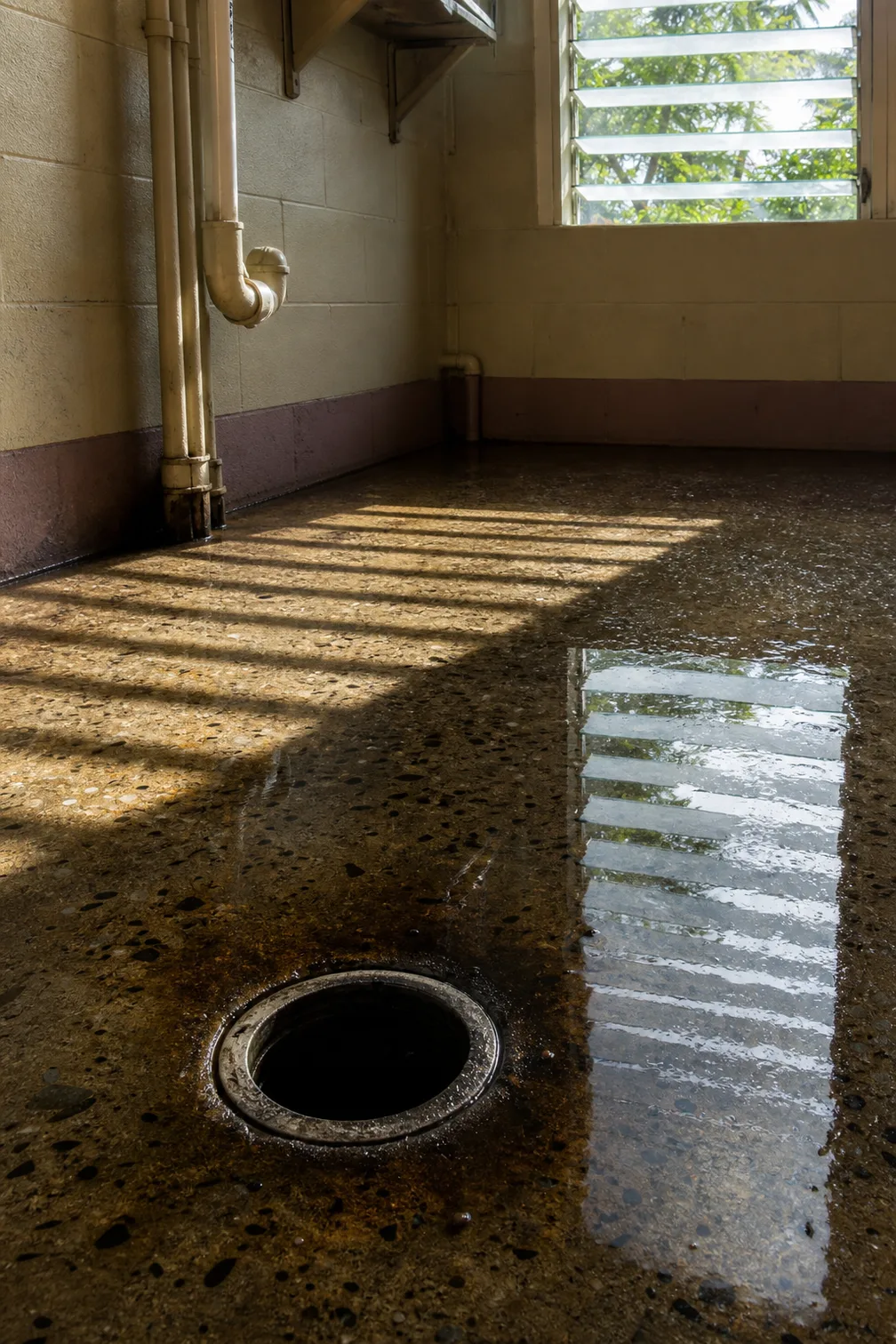
What sewage cleanup in Hialeah, FL has to deal with
Sewage cleanup is the removal, disinfection and drying of a building after water carrying human waste has come back into it. The order in that sentence is the whole job. Every other water event on this site is dried and then repaired. This one is cleaned first, and drying is the last question rather than the first.
Backups reach a house in a small number of ways. A blockage in the property's own drain line sends the flow back to the lowest opening, which is usually a shower tray, a floor drain or a ground-floor toilet. A blockage or a surcharge further out in the public system does the same thing to every property on that stretch of line. Heavy rain can push the whole system past capacity for an hour and produce the same result at the same low point.
Which of those happened matters for who pays, and it is answerable rather than a matter of opinion. That is what the second half of this page is about.
Category 3 water damage, and why the grade decides the method
The restoration trade sorts water into three grades by what is dissolved and suspended in it, and the grade is a handling instruction rather than a measure of how bad the day is.
Clean water from a supply pipe can be extracted and dried where it lies. Slightly contaminated water gets cleaned as it is dried. Water carrying human waste is the third grade, and the rule is that porous material which absorbed it is removed rather than treated, because there is no way to verify that the inside of a piece of drywall or a carpet pad has been disinfected.
That single rule is why a sewage quote and a clean-water quote for the same puddle look so different. On a clean water job the contractor is buying drying time. On this one they are buying disposal, replacement and labor, and the drying at the end is the cheap part.
The second consequence is sequencing. Air movers do not go in until the contaminated material is out and the hard surfaces have been cleaned. Putting them in early is the most common way a one-room problem becomes a three-room problem.
Sewage backup cleanup, in the order it happens
The visible steps are consistent even though the scale is not.
Containment comes first. The affected rooms are closed off, everyone stays out of them, and nothing more goes down any drain in the building, because every fixture that runs sends more flow at the same blockage.
Extraction follows: the standing liquid is removed with equipment that is not going to be used on a clean job afterwards. Then the porous material comes out. Carpet and pad, the lower section of drywall, any cabinet base that soaked, and insulation inside the wall if the water reached it.
Cleaning is next, and it is a two-pass job on every hard surface the water touched. The first pass takes away the soil, because a disinfectant applied over a dirty surface disinfects the dirt. The second pass is the disinfectant itself, left for the contact time on the label rather than wiped straight off.
Drying is last, and by the time it starts there is much less material left to dry than there was at the beginning.
Toilet overflow cleanup, and where the line falls
Not every overflow is a sewage job, and the distinction is worth knowing before anyone quotes on it.
Water that comes over the rim of a bowl because a fill valve stuck is clean water. It is unpleasant and it can still soak a floor, but it is handled as a clean water spill.
Water that rises back up through the bowl, or comes up through a shower drain when a toilet is flushed somewhere else in the house, is coming from the drain line. That is the third grade, and it also tells you something a plumber will want to know: the blockage is downstream of both fixtures, so it is in the building's main line rather than in the toilet.
A house on city sewer that backs up at more than one fixture at once is reporting a line problem, not a fixture problem. Very few properties in this city are on a septic system, so the line usually runs to a public main.
How to check whether the overflow was the utility's
If sewage came back into a house during heavy rain, or came back into several houses on the same street, the release may already be on the public record.
Florida has a public notification law, and it is unusually direct. Under Fla. Stat. s. 403.077, the owner or operator of an installation where a reportable pollution release occurs must give the department the information reported to the State Watch Office within 24 hours of discovering it. An untreated wastewater release from a public sewer system is that kind of event.
The other half of the statute is the part a homeowner can use:
The department shall publish on a website accessible to the public all notices submitted by an owner or operator pursuant to subsection (2) within 24 hours after receipt.
The department also has to run a mailing list, with regional lists by county, so that residents, local governments and news media can be told when a notice is filed near them. The notices are searchable on the Florida Department of Environmental Protection's public notice of pollution site.
Two practical uses follow. First, a published notice covering your street on the day of your backup is evidence about the source that you did not have to generate yourself, and it is dated and timed. Second, subscribing to the county list costs nothing and means the next event arrives as a notification rather than as a discovery.
None of that decides a claim. It is a dated record, which is a better place to argue from than somebody's memory of the afternoon.
What follows the cleaning
Once the contaminated material is out and the surfaces are clean, the remaining risk is the ordinary one: material that stayed wet. Warm still air and damp organic material behave here the way they behave everywhere, only faster, and growth that starts inside a wall is not visible from the room.
If growth has already appeared, or if the backup sat for more than a day before anyone got to it, the next stage is mold remediation, which in Florida is a licensed trade with its own statute and its own rules about who may do what.
If the water reached a ceiling below rather than a floor, which happens when the backup is on an upper floor, the drying sequence is on ceiling water damage repair.
If the property is a condominium
A backup in a stacked building raises a question a single-family house does not: whether the line that failed is inside the unit or is part of the common elements, and therefore who is responsible for what.
That allocation is a matter of the Florida Condominium Act and the individual association's declaration, and it is not something a restoration quote can settle. Our condo water damage guide sets out how the split generally works and what a resident should document in the first day. A dispute about who pays is a question for a Florida community-association attorney.
Where to go next
Category 3 water also tends to be followed by a mold question, because the materials that have to come out are the same ones that would otherwise hold moisture against a wall. Remediation is separately licensed in Florida and priced on its own terms; our guide to what a Florida mold job costs sets out what a published state policy form caps this category at.
The rest of the trade is on water damage restoration in Hialeah and the full job list is on the services hub. Properties in the neighboring municipalities are covered too, including Opa-locka, with the rest on service areas.
Sewage backup questions from Hialeah homes
-
How do I clean up sewage?
A small overflow onto a hard floor, caught immediately, contained to one bathroom and cleaned with the right products, is within reach of a homeowner in protective gloves and a mask.
Past that it stops being a cleaning task. Once the water has crossed a threshold, reached carpet, or gone under a cabinet or a wall, the work is removal and disinfection rather than mopping. The EPA's own mold cleanup guidance says that where damage was caused by sewage or other contaminated water you should call in a professional with experience of contaminated water.
-
How much does it cost to clean up sewage?
More per square foot than clean water, and for a reason that is easy to see on a quote: more of the room leaves the building. Flooring, the lower wall and anything porous the water touched are disposal items rather than drying items.
The size of the affected area therefore drives the number harder than the volume of water does. A cupful under a wall can cost more than a bucketful on tile.
-
What is category 3 water damage?
The restoration trade grades water in three steps by what is in it. The first is clean water straight from a supply pipe. The second is water that has picked something up along the way, such as an appliance discharge or storm runoff. The third is water carrying human waste or other seriously contaminated material.
A sewage backup is the third grade, and the grade is not a severity rating. It is a handling instruction: clean and disinfect first, dispose of the porous material, and only then dry what is left.
-
Is a toilet overflow the same thing?
It depends entirely on which side of the trap the water came from. An overflowing bowl of clean water from a stuck fill valve is a clean water spill. Water rising back up through the bowl, or up through a shower drain when a toilet is flushed, is coming from the drain line and is treated as the third grade.
The second case is also a signal about the line itself rather than the fixture, so a plumber usually needs to look before any repair is quoted.
-
Can I stay in the house?
That is a question for a health professional rather than a restoration quote, and it depends on which rooms are affected and who lives there. What is straightforward is the containment: keep people and pets out of the affected rooms, stop running water into the drains, and do not run a fan across contaminated material.
Running air over it before it is cleaned moves what is in it into the rest of the house, which turns one room into several.
-
Will my insurer treat this as water damage?
Sewer and drain backup is commonly excluded from a standard policy and offered as a separate endorsement, so whether it is covered depends on what was added to the policy rather than on what happened.
Photograph everything before it is cleaned, keep every disposal note the contractor issues, and check whether the backup was reported by the utility, because that record is public.
Get a quote for sewage cleanup in Hialeah
Tell us which rooms were reached and what the water came back through. One restoration contractor working in this city will come back to you with a price.
Serving Hialeah and Miami-Dade County.